Agriculture in the Central Okanagan: Challenges, Change, and the Power of Collaboration
Advisory Committee April 28, 2026
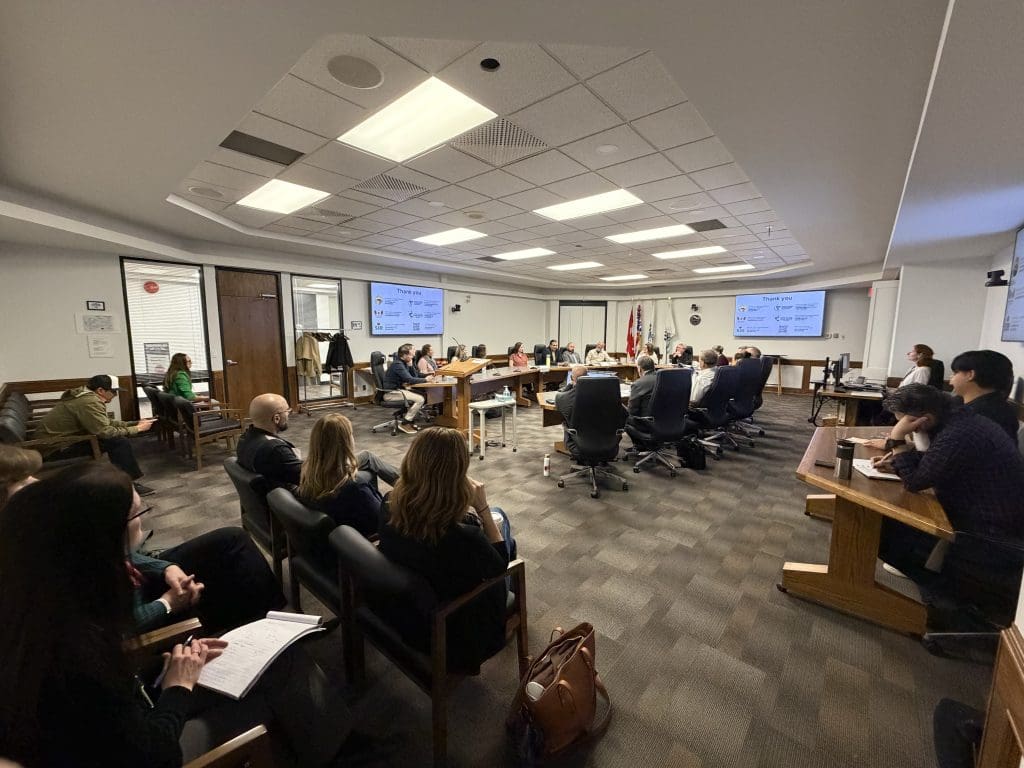
The latest COEDC Advisory Committee meeting featured a deep and timely discussion on the state of agriculture in the Central Okanagan, underscoring both the significant pressures facing producers and the critical need for stronger collaboration across the sector.
Strengthening Leadership Through Collaboration
Kellie Garcia, Project Director of the Cross Commodity Leadership Support (CCLS) Project, provided an overview of the initiative, which brings together five key industry organizations representing tree fruits and wine grapes: the BC Cherry Association, BC Fruit Growers’ Association, BC Grape Growers’ Association, BC Wine Grape Council, and the Okanagan Kootenay Sterile Insect Release (SIR) Program.
The project has become an important coordinating and leadership bridge following the dissolution of BC Tree Fruits, helping to reduce fragmentation and improve cross‑commodity alignment. Temporarily funded by the Ministry of Agriculture through the end of 2026, the CCLS Project is focused on shared priorities including economic viability, farm labour and worker housing, horticultural support, water access, and government relations. “A sincere thank you to Myrna Stark Leader, the COEDC’s Agriculture Specialist. Her support strengthens connections between agriculture and economic development, and the COEDC and agricultural community benefit greatly from her work,” says Kellie Garcia, Project Director at the Cross-Commodity Leadership Support Project. While the initiative has strengthened collaboration and advocacy across the sector, participants emphasized the need for sustained resources to support this work beyond the current funding period.
On‑the‑Ground Perspectives from Industry Leaders
The meeting also included a panel discussion facilitated by Myrna Stark Leader, Agriculture Program Specialist with COEDC, featuring Sukhpaul Bal (President, BC Cherry Association), Adrian Arts (Executive Director, BC Fruit Growers’ Association), and Kevin Day (Owner and Manager, Day’s Century Growers).
Panelists spoke candidly about the impacts of the BC Tree Fruits Cooperative closure and the loss of a unified industry voice. While other regions are consolidating, the Okanagan’s fruit sector has become increasingly fragmented, making coordination and advocacy more challenging at a time of rising costs and market uncertainty.
Producers are facing steep cost pressures, including fertilizer increases of approximately 80 per cent and labour cost increases of 20–30 per cent. Many long‑standing operations remain viable largely due to efficiencies built up over decades, leaving little room to absorb further shocks.
Climate, Trade, and Infrastructure Pressures
Climate‑related impacts are increasingly shaping production decisions. Smoke events are accelerating ripening in crops such as Bartlett pears, increasing reliance on controlled‑atmosphere storage. Frost risk, water access, and limited reservoir capacity remain ongoing concerns, with panelists calling for improved coordination among local governments and agencies to advance water storage infrastructure in response to changing climate conditions.
Global trade pressures continue to disadvantage Central Okanagan producers relative to competitors in jurisdictions such as Washington State, where land costs are lower and orchard sizes are significantly larger. Trade volatility with the United States has further exposed vulnerabilities, prompting the cherry sector to pursue collective export strategies in Asian markets. Growers also noted that, despite high retail prices, producers receive a relatively small share of the final consumer dollar, particularly challenging for crops like cherries with limited storage options.
Innovation, Research, and the Path Forward
Innovation was widely recognized as essential but difficult to implement. Smaller‑scale operations face barriers in adopting new technologies, while programs such as the Sterile Insect Release Program and the BC Decision Aid System continue to deliver benefits in efficiency and reduced chemical use despite funding constraints. Food safety requirements and the cost of technologies such as grading systems, drones, and autonomous equipment that remain out of reach for many producers.
Panelists also emphasized the global importance of the Summerland Research and Development Centre, noting that roughly 80 per cent of the world’s cherry varieties trace their origins to decades of research and breeding conducted there. With agricultural reinvestment in British Columbia lagging behind the sector’s economic contribution, there was strong consensus that closer alignment between local innovation, policy, and investment is needed to unlock the region’s long‑term agricultural potential.
Call to Action
Agriculture remains a foundational pillar of the Central Okanagan’s economy, but sustaining it will require coordinated leadership, long‑term investment, and cross‑sector collaboration. COEDC will continue to convene industry, government, and community partners to advance shared solutions.
If you are an agricultural producer, agri‑business, researcher, or partner with an interest in this work, we welcome you to connect with COEDC and be part of the ongoing conversation shaping agriculture in our region.
The COEDC Advisory Committee is a 45‑member group of industry leaders, community partners, and elected officials that meets monthly to support sustainable economic growth across the Central Okanagan.
Meeting minutes from this session are available online
You Might Also Like...

Statement from RDCO Board Chair Loyal Wooldridge on Kelowna Council direction regarding the COEDC
Communities are stronger when we work together.
COEDC News June 3, 2026

COEDC launches new Business Resource Hub to support Central Okanagan businesses
Making it easier for businesses across the Central Okanagan to access the supports they need…
COEDC News May 26, 2026

COEDC announces 2026 Advisory Committee members
The committee convenes monthly to exchange information and works to foster sustainable economic growth in…
Advisory Committee January 30, 2026